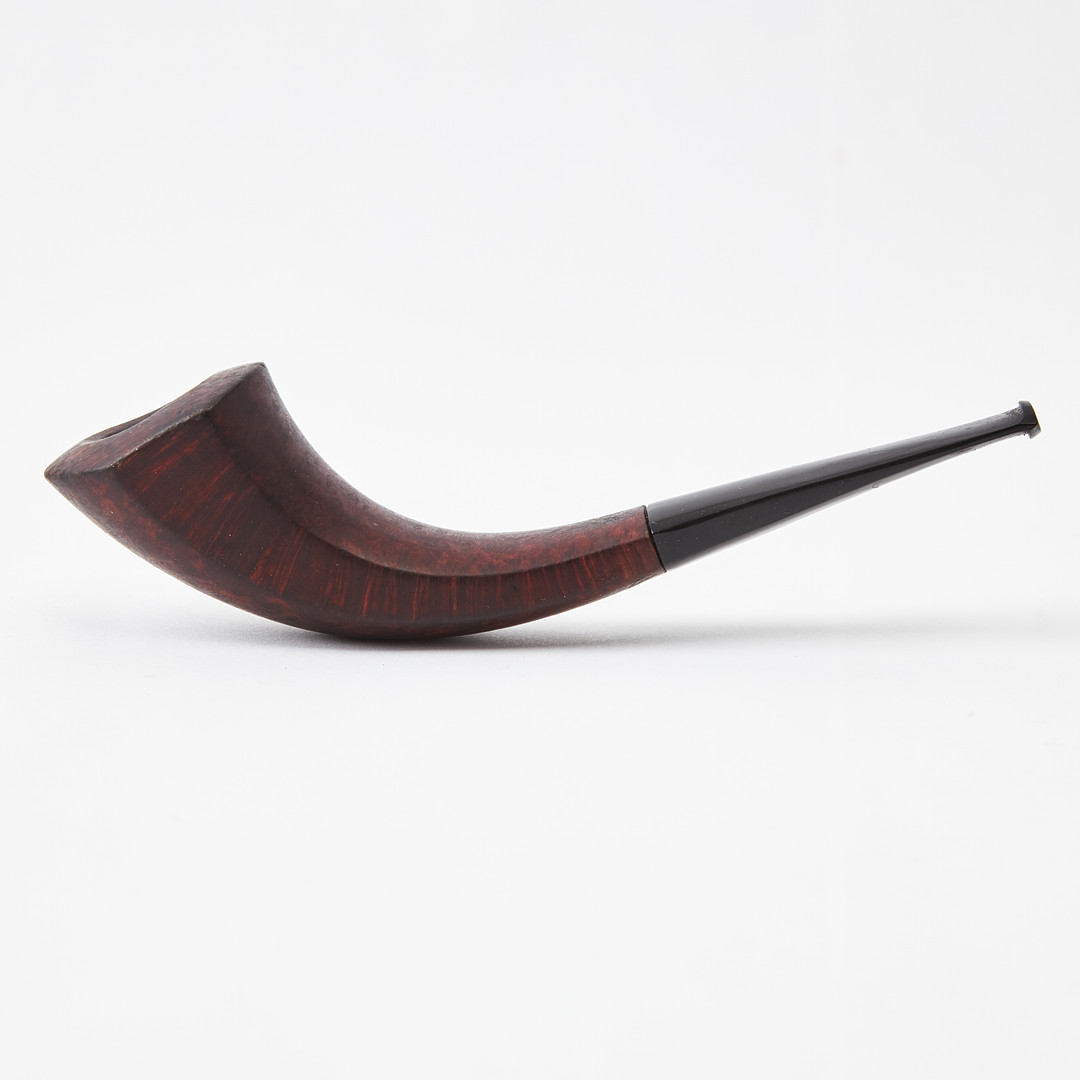
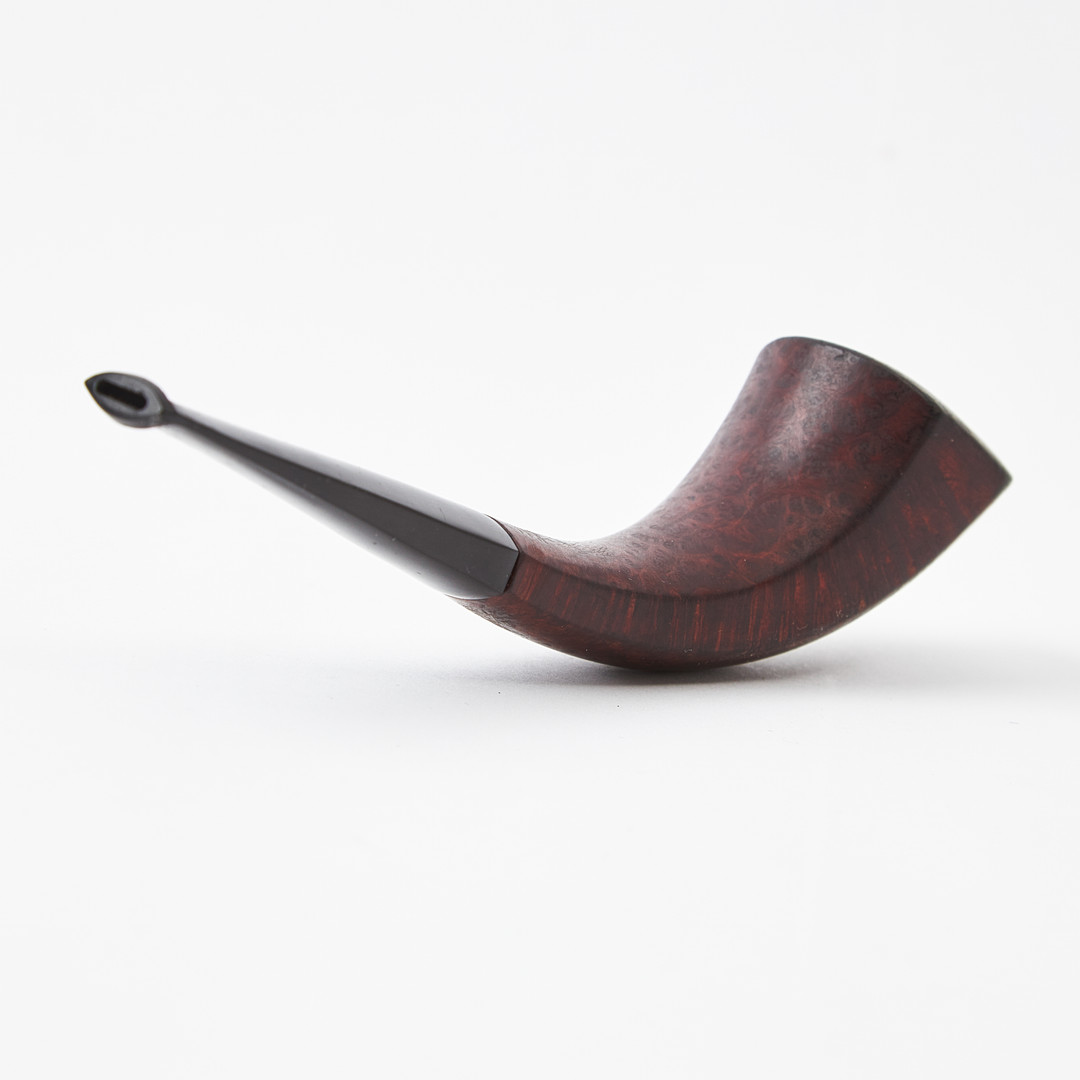
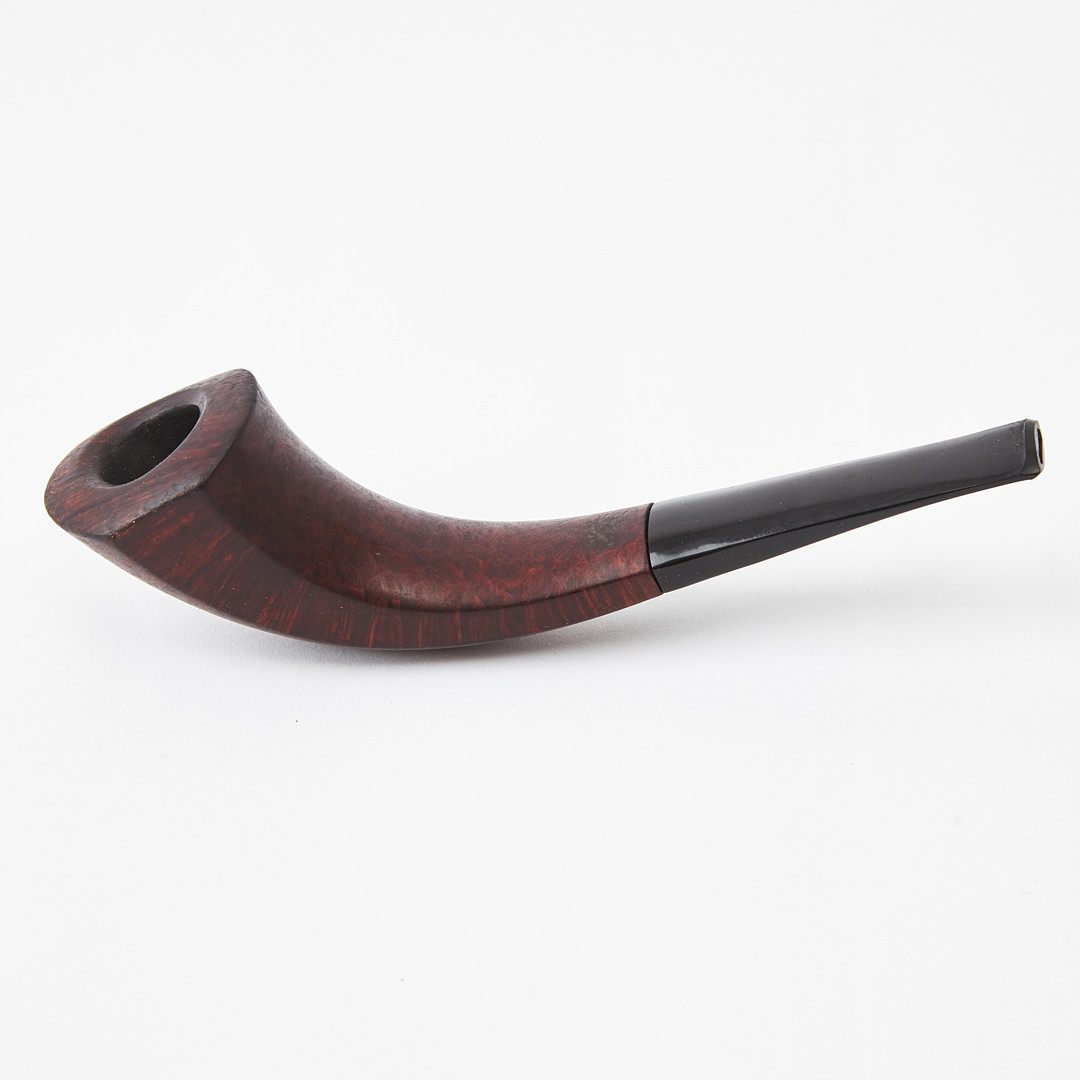
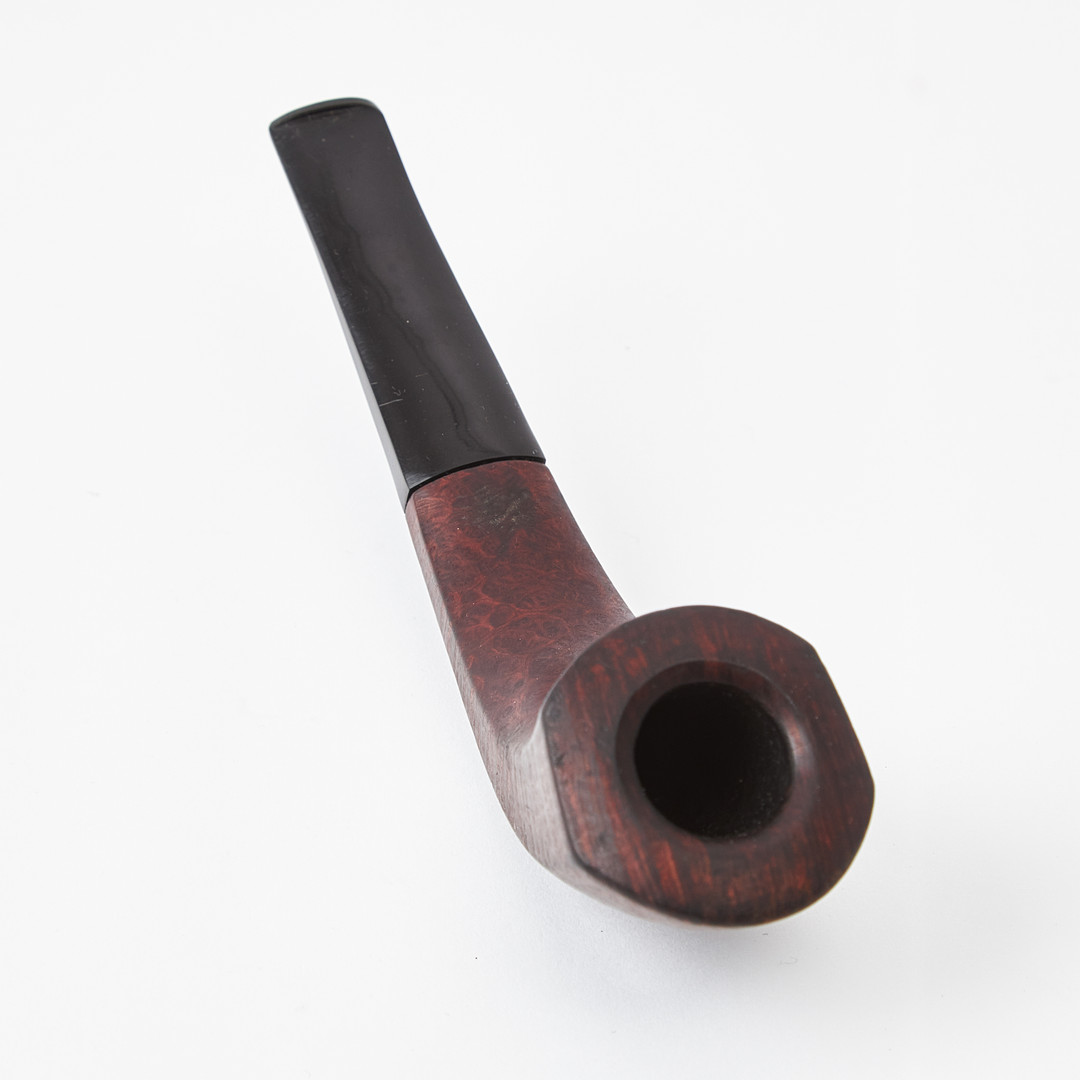
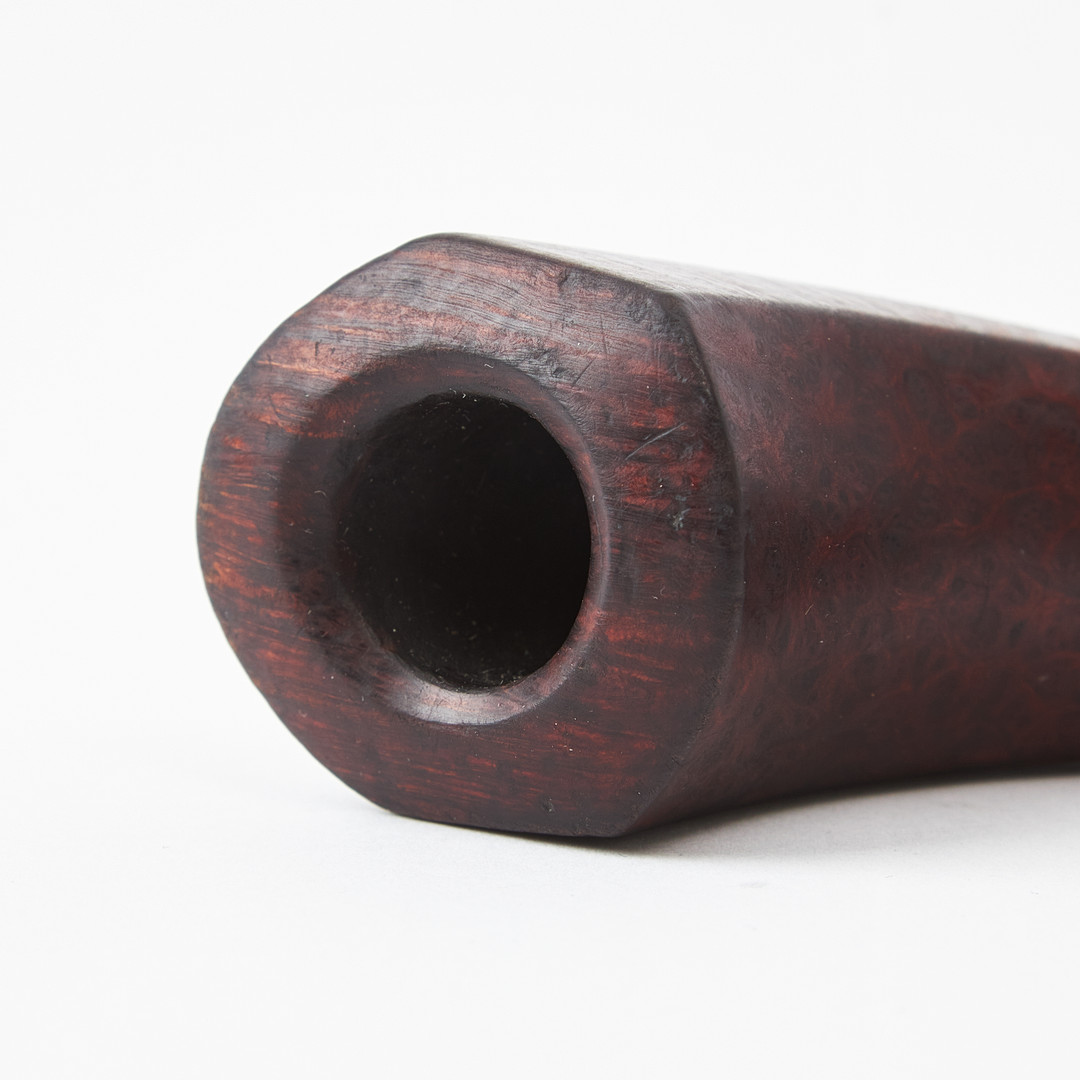
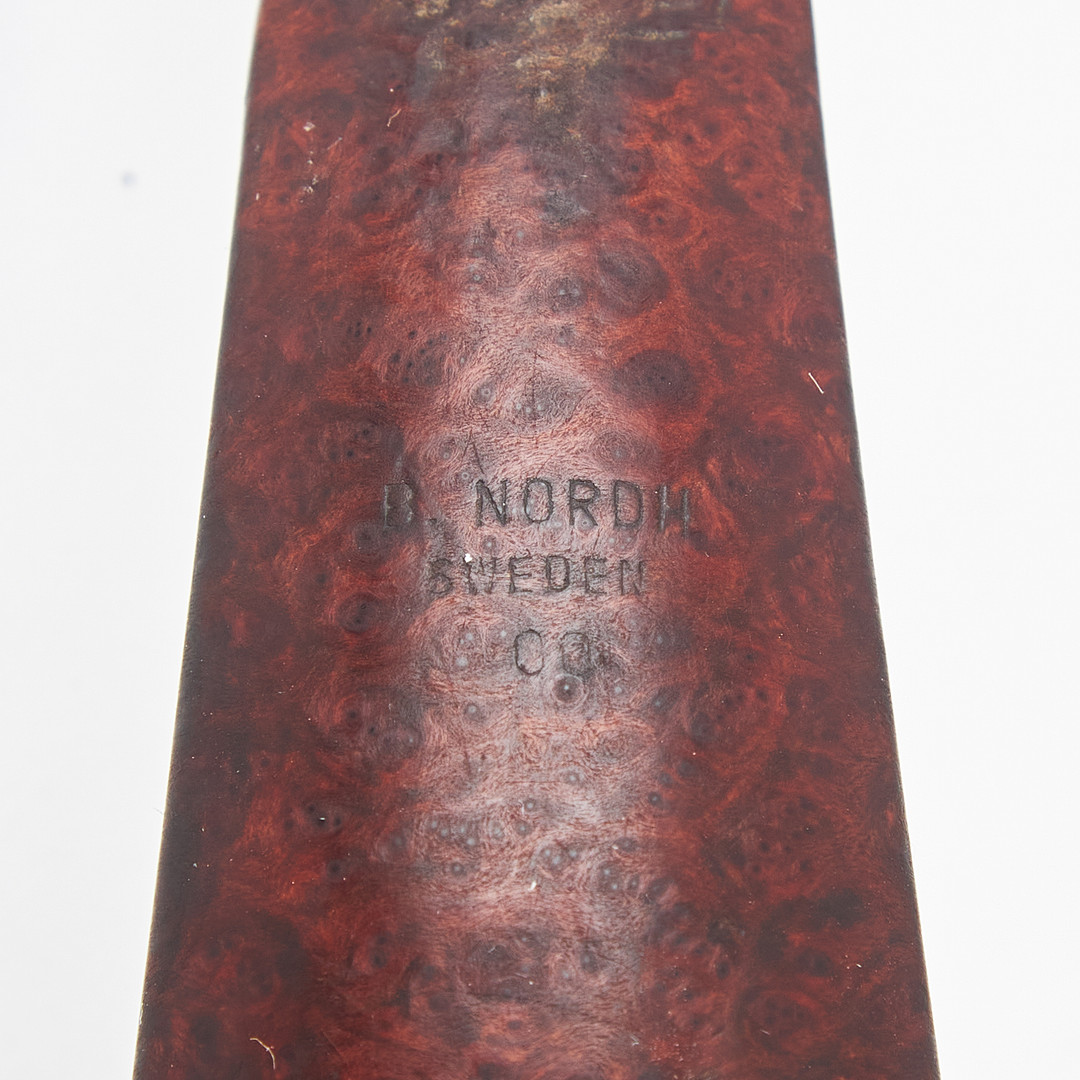
Längd ca 17 cm
Historik:
"Bo's production has never been large - about fifty pipes a year and today more likely thirty than fifty. I asked a bit surprised if he did not make more in the beginning. It must be tempting when you are new in the business and the buyers just want more and more pipes. Bo, however, denies this and the explanation is of course his attitude to quality, which is free from compromise, a second nature to Bo. He would never dream of selling a pipe which he is not entirely happy with however insistent the buyers are."
"A Bo Nordh pipe is usually a combination of briar and ebonite. Trends like inlay of various types of wood in the stem or the shank has never appealed to Bo. Neither does he make the stems in acrylic, man-made amber or any of the other materials, which are so popular these days.
There are, however, certain materials in addition to briar and ebonite which have found favour after critical investigation. Horn is used in certain insert (military) pipes. "A sensitive and difficult material which requires to be stored for a long time in order not to crack," says Bo. Bamboo is sometimes used, often because he has found a fault in the shank of an otherwise nice pipe. Boxwood is also used but mainly in the Calabash-model where the cup is a combination of briar and boxwood. "But there are times," Bo confesses, "when I have made an insert pipe of boxwood instead of horn. But that has happened when I have been in a hurry and not found a suitable piece of horn."
So there have been occasions when someone has managed to stress Bo, at least a little."
(Utdrag ur text av Jan Andersson, hämtad från Pipedia)
https://pipedia.org/wiki/Nordh
Har följerätt.